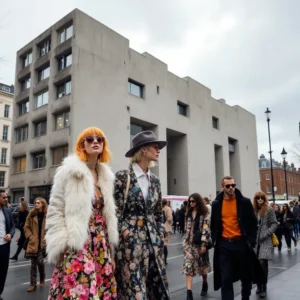
Spring 2026 marked a restless tide in fashion—change surging through the industry as an unusually large cast of creative directors debuted their visions for storied houses. By autumn, a few names had already moved from the thrill of introduction to the challenge of continuity. For others—Demna stepping into the halls of Gucci, Meryll Rogge reimagining Marni—it was the electric tension of a first impression. Even so, across the collections, there was less of the nerves and awkward fits of newness. Instead, a visible comfort was seeping in: designers starting to move in sync with their teams, their initial rough sketches sharpening toward something all their own.
The conversation in fashion has shifted. Gone is the era of grand reinventions met with wary speculation; Autumn/Winter 2026 feels more like methodical, steady-handed editing. This season, labels seem to have traded showy pageantry for quiet confidence. They returned to what made them revered: razor-sharp tailoring, heritage knits, coats built to anchor wardrobes for years. Each house doubled down on its strengths—polishing, refining, reasserting its core values rather than scrambling to dazzle with reinvention.
Still, experimentation pulsed as an undercurrent—textile storytelling at its boldest. In New York, Daniella Kallmeyer unveiled her custom-developed shearling with pride. Milan saw Louise Trotter rethink texture itself, sculpting it, juxtaposing technical textiles against silks. Jonathan Anderson, helming Dior, drew inspiration from a morning stroll—brocades, lamés, and embroidery layered into an homage to the maison’s feminine roots. The famed Bar jacket made its return, subtly tweaked—a soft new peplum, a hint of the future peeking through classic lines.
Perhaps the most striking quality of this autumn wasn’t theatricality, but assurance. The strongest trends emanated clarity, discipline, an almost craftsman-like humility. Tailoring gleamed with precision, knits nodded to the familiar yet felt urgent and right-now. The coat, in every guise, loomed large—more statement than supporting piece. Together, these collections signaled a moment: designers know who they are. The introductions are done; it’s time to show what matters.
Fair Isle’s intricate patterns resurfaced, not quietly, but insistently, claiming territory across the runways. This centuries-old knitting technique—born on a distant Shetland isle, conjuring winter winds—reimagined itself in every form imaginable. Heritage danced with novelty. Altuzarra clung to the classic sweater. Khaite dialed up the sparkle, sending knits that glimmered when the runway lights hit. Marni rewrote the rules entirely, sending Fair Isle into the realm of knit underwear, while Brandon Maxwell opted for subtlety with soft, muted neutrals.
This wasn’t nostalgia. It was a feeling—suddenly, the Fair Isle sweater turned not just cozy, but essential, sliding just as easily beneath a crisp blazer as shrugged on solo. Designer iterations mingled with vintage gems sourced from Etsy. Message received: the old ways still have stories left to tell.
Material Goods
Touch became a running theme. Designers coaxed drama from fabric itself—tapestry textures, plush faux furs, sculptural ruffles. The backstage work of ateliers was suddenly front and center, each piece daring you to reach out just to feel it.
At Bottega Veneta and Dior, material was the main protagonist; each fabric a chapter, each texture a plot twist. Brocades gleamed beside engineered furs that mimicked nature without cruelty. Edges frayed, ruffles twisted on themselves, feathers burst outward—a tactile feast, proof that fabric, not silhouette, is sometimes the message itself.
Tailor Made
Nothing says confidence like a coat that fits as if it was conjured for you alone. This season, tailoring returned to the spotlight: coaches, blazers, pencil skirts, each line cut with almost mathematical precision. These pieces didn’t chase the whims of “in” or “out,” they anchored wardrobes, ready for any scene.
Designers like Simone Bellotti at Jil Sander and Matteo Tamburini at Tod’s leaned into Italian restraint—crisp lines, flawless construction, and a refusal to pander to fleeting trends. The result? Clothing that didn’t have to shout to be significant.
Heart Warming
Some coats this season demanded such presence, the rest of the outfit dissolved into irrelevance. Buttoned high, belted tight, or floating in voluminous reservoirs of fabric, they dominated both runway and imagination. Imagine shearing off everything but the coat, a sturdy bag in hand, power in your stride—that was the mood sweeping through Fall 2026. Sometimes, one garment is simply enough.
Good Sport
An unmistakable athletic undercurrent threaded its way through collections, just as Milan buzzed with residual Olympic energy. Yet, the references felt refined, all grown up. Prada leaned into sleek, bejeweled silhouettes with a technical edge. Tory Burch offered polos that could slip through any country club undetected or headline a fashion spread. Dries Van Noten and Marni found fresh sophistication in varsity blazers and colorblocked half-zips—less locker room, more artful nod.
Defining Layer
Layering this season broke out of the formulaic. Gone were the obvious shirt-over-turtleneck stacks. Instead, designers paired satin dresses and ruffled maxi skirts with thick knit scarves, oversized blazers, clashing textures—accidental elegance, the kind born from curiosity, not calculation. Outfits seemed thrown together in that just-right way, reminding us: fashion is as much instinct as intention.
—Written by Sara Holzman, Style Director, Marie Claire